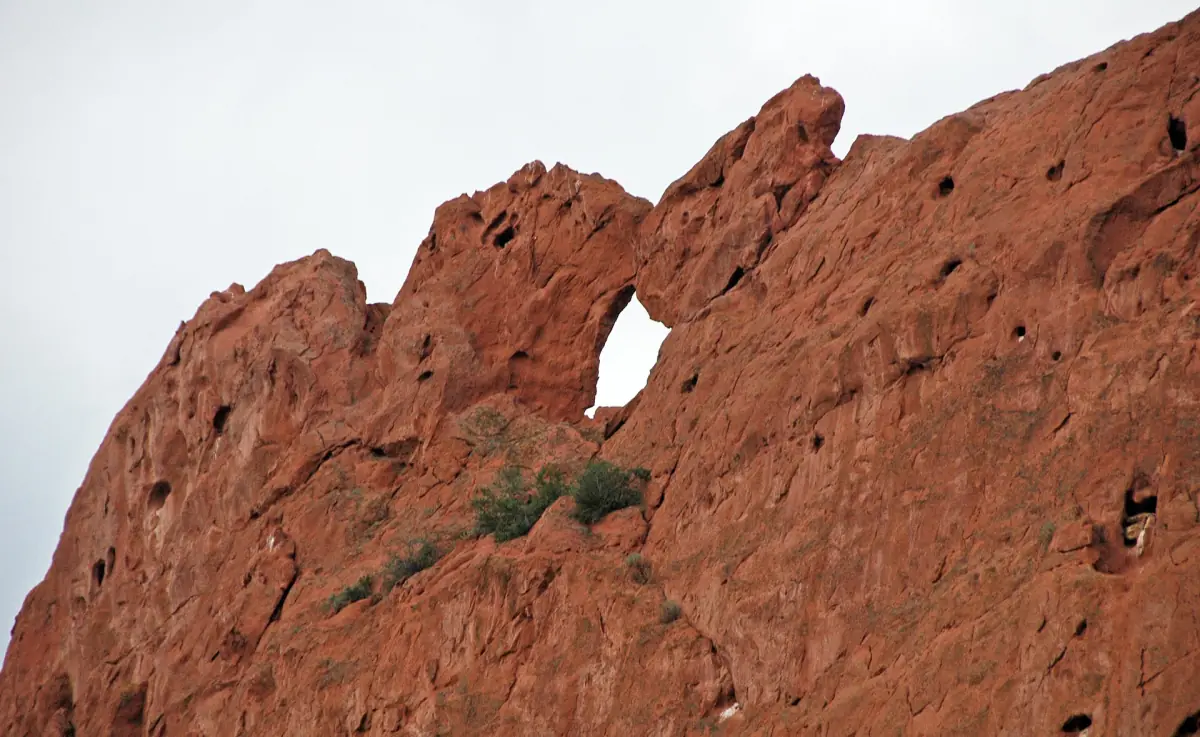
Kissing Camels and the named formations
The city's park map lists many rocks by name, among them Kissing Camels, Cathedral Spires, Three Graces, Sleeping Giant, Balanced Rock and Steamboat Rock. They are formations in a free city park, not separate attractions with their own entry fee. You see them from roads, lots and marked paths.
This is an independent guide, not the website of the city or the visitor center. The names come from the park map, and a guided tour may or may not stop at each rock, so ask your operator before you book. A name on a map is not permission to climb.
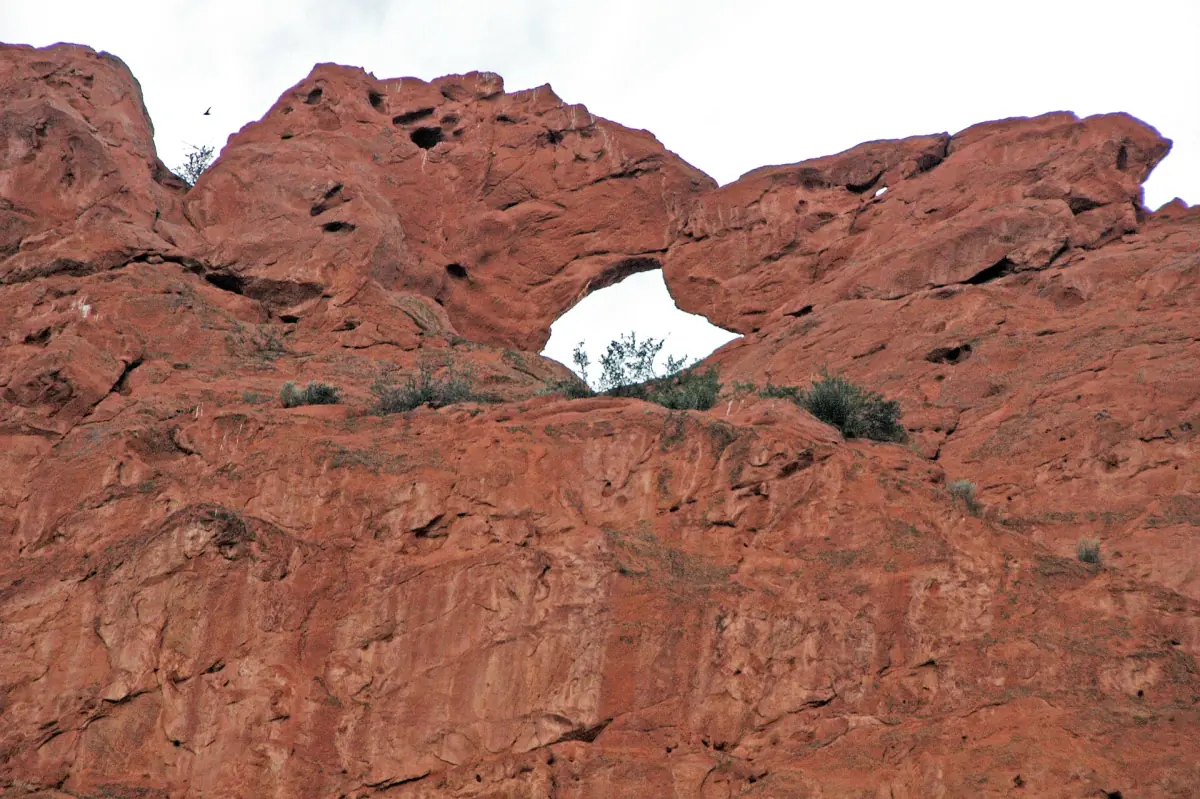
The best known rocks at Garden of the Gods
What the park map and the operators say about each, in plain terms.
Kissing Camels
The name suggests two camels facing each other, and the formation sits on a red sandstone ridge. A guided Segway route description names Kissing Camels as a viewpoint. Look for the name on the park map to find where you can see it.
Cathedral Spires
The city map lists the Cathedral Spires. A photo on this page shows Pulpit Rock and the spires under afternoon clouds. A historic black-and-white photo by William Henry Jackson shows the same spires.
Three Graces
A group of slender sandstone spires. City teaching material places them in the Fountain Formation. The Segway route description also names them as a viewpoint.
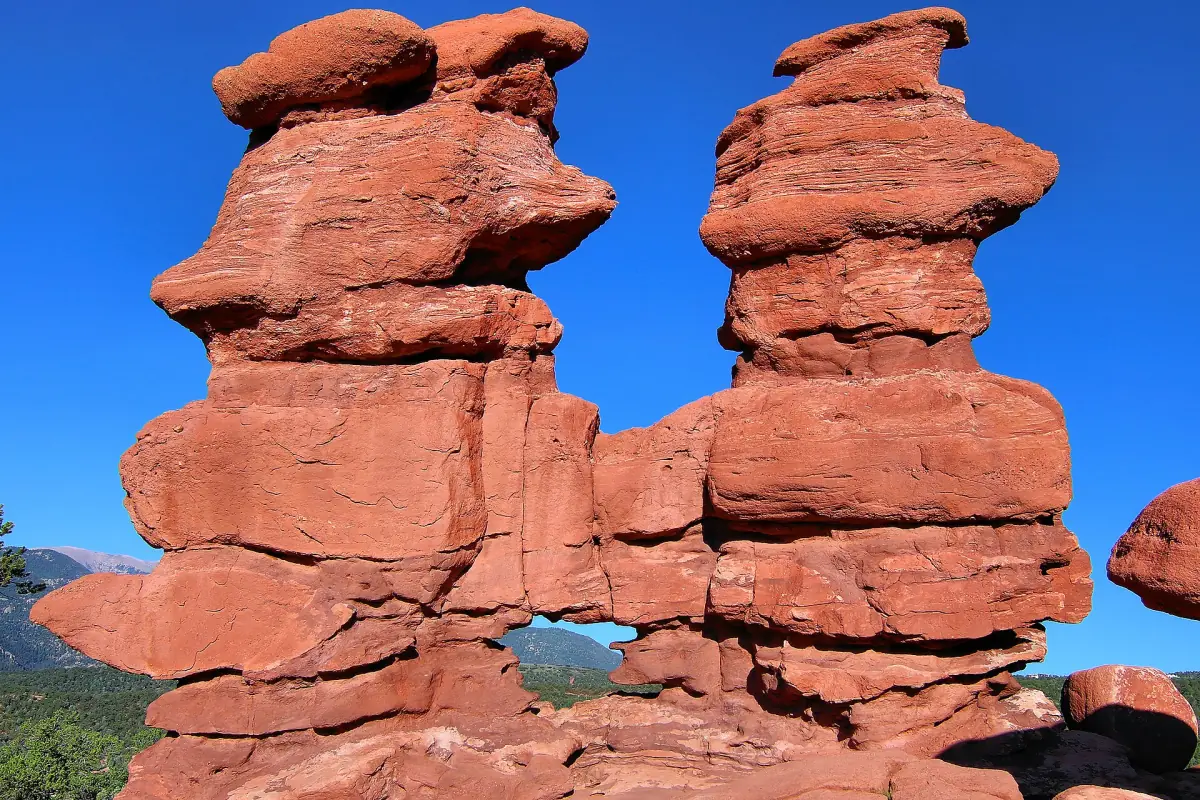
Siamese Twins
A formation with a window in the rock. A 1 mile (1.6 km) out-and-back trail leads there, and Pikes Peak shows through the opening. See the trails page.
Sleeping Giant and Steamboat Rock
Both appear on the city map. Sleeping Giant is named on a Segway route. Steamboat Rock stands near Balanced Rock, but do not treat any formation as free to climb.
Balanced Rock
The rock that seems to rest on a small base has its own guide, with parking and photo advice.
Balanced Rock →Siamese Twins
The Siamese Twins formation is a short walk from the Siamese Twins trailhead. The trail is 1 mile (1.6 km) out and back with less than 150 feet (45.7 m) of climb, and it is rated easy. At the end, a window in the rock frames the view toward Pikes Peak. City teaching material places the Siamese Twins in the Fountain Formation.
Stay on the trail. The rock around the window is for looking at and photographing, not for climbing through.
Tours that pass the famous rocks
Guided jeep, Segway, trolley and bike tours at Garden of the Gods, plus day trips from Colorado Springs, with live prices and availability.
Cathedral Spires
The city map lists the Cathedral Spires by name. The historic photograph by William Henry Jackson shows how long visitors have looked at them. Light changes the color of the rock through the day, and the park opens at 5 a.m., so early hours are possible when the sun is low. Sunrise time depends on the date.
Photograph from the roads, the lots and the marked paths. Do not leave the path for a better angle, and do not fly a drone, because drones are banned in the park.
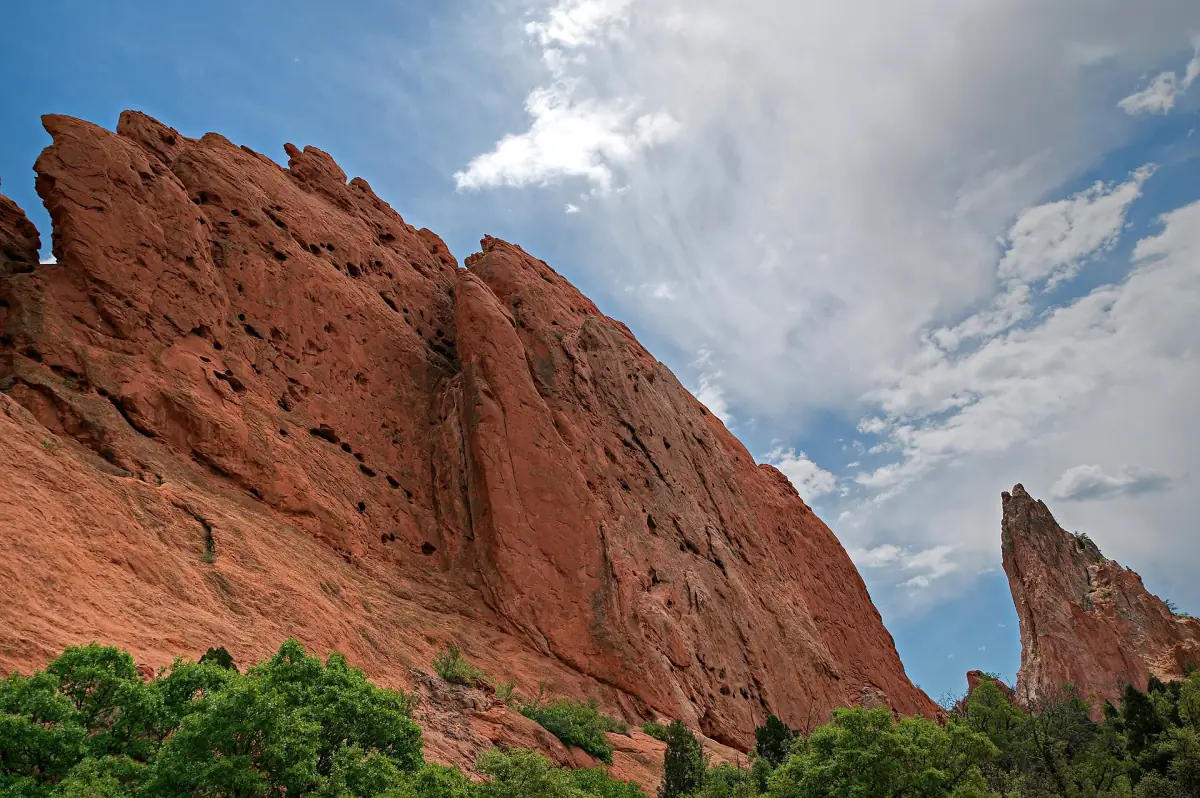
Three Graces
The Three Graces are a group of slender sandstone spires. Like Balanced Rock and the Siamese Twins, city teaching material assigns them to the Fountain Formation. Other rocks, such as North and South Gateway and White Rock and Gray Rock, belong to the younger Lyons Formation according to the same material.
The city lists seasonal climbing closures for Gray Rock and North Gateway. If you see climbers, watch from the path. For permits and rules see rock climbing.
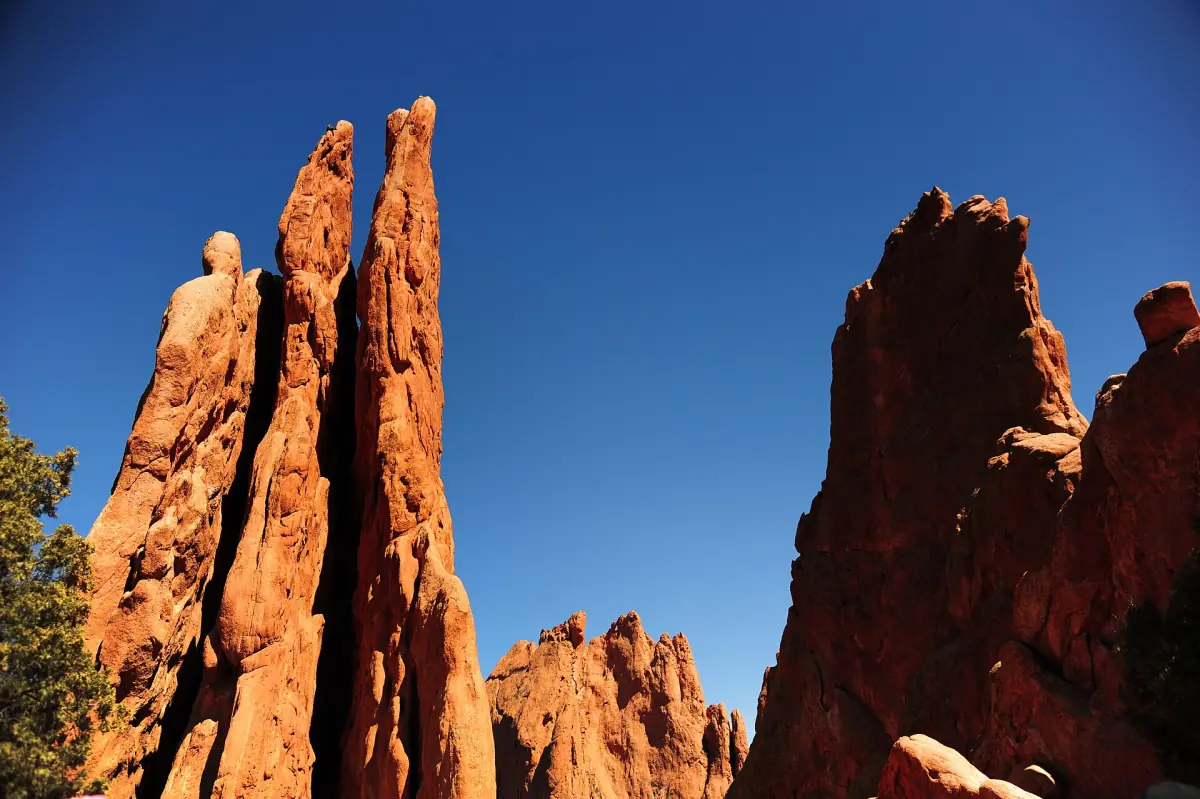
Why the rocks are red: a short geology guide
The figures come from city teaching material.
| Formation | Age | Material | Rocks named in the material |
|---|---|---|---|
| Fountain Formation | 320 to 300 million years | Sand, gravel and mud from the Ancestral Rockies | Balanced Rock, Siamese Twins, Three Graces |
| Lyons Formation | 300 to 260 million years | Former sand dunes; red and white sandstone | North and South Gateway, White Rock, Gray Rock |
Iron oxide gives the sandstone its red color. The layers began to break and tilt upward from about 70 million years ago, and erosion later shaped the ridges and valleys. The shapes you see today are younger than the rock itself.
Names and history
The place was named long after people first lived here.
The operator of the visitor center names the Nuu-ciu, or Ute, as the original inhabitants, and says other Native nations also have ties to the land. The Ute Trail crossed this area, and the Ute were forced onto reservations in southwest Colorado and Utah in the 1870s. The European American name dates to 1859, when M. S. Beach and Rufus Cable named the landscape, linked to a remark about a beer garden. In 1909 the children of Charles Elliott Perkins gave 480 acres to the city on the condition that the park stays free to the public. That is why entry is free today.
Rules for looking at and photographing the rocks
The same rules apply at every named formation.
Stay on official paths
Take photos from roads, lots and marked paths. Do not take anything from the park, and do not feed or touch wildlife.
Climbing needs a permit
Technical climbing needs a free annual city permit. Unprotected scrambling above 10 feet (3.05 m) from the base is banned. Climbing on wet sandstone and the use of chalk are also banned.
Dogs and drones
Dogs must be on a leash. Drones are not allowed.
Thunderstorms
Summer thunderstorms are possible. When you hear thunder, go into a building or a fully enclosed car.
Keep exploring
Pages for your visit.
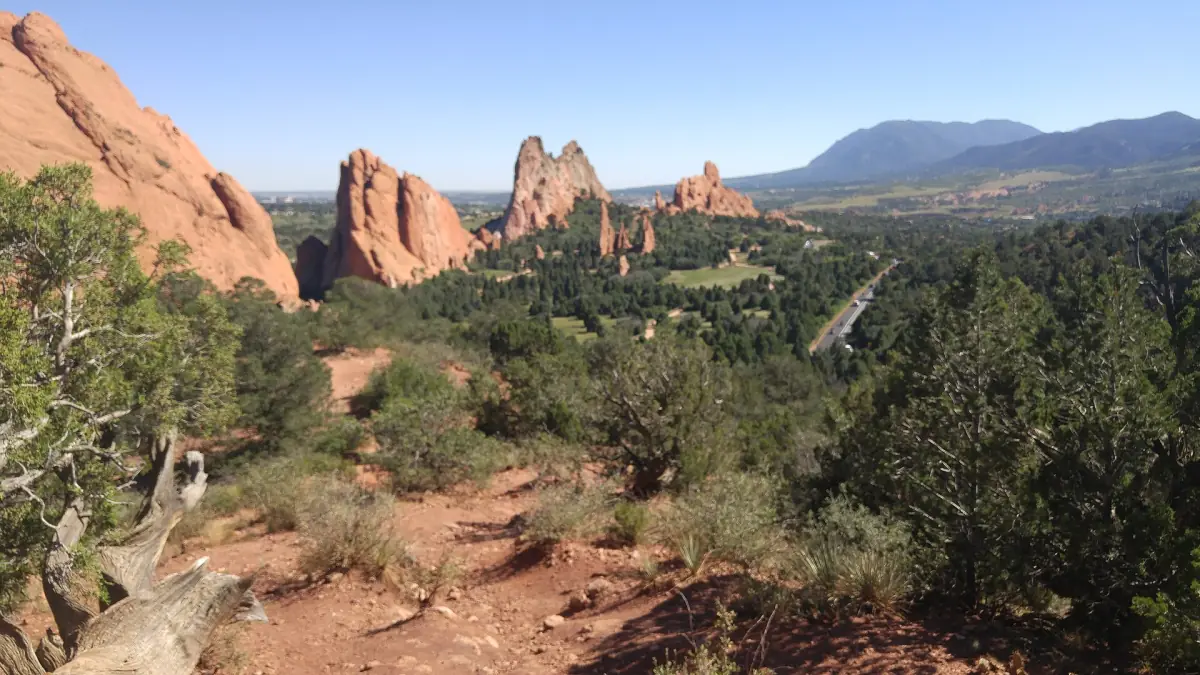
Trails
Loop lengths and climbs, including the Siamese Twins trail.
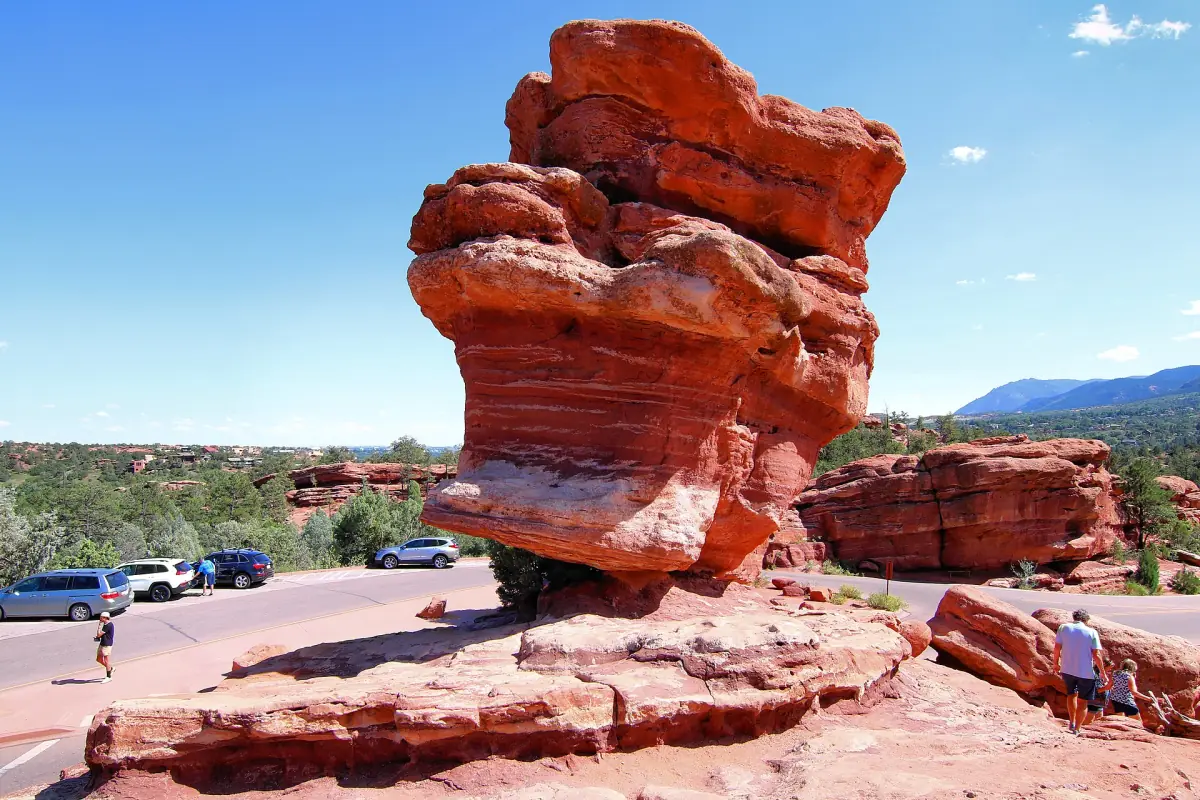
Balanced Rock
Where to see it and how the rock came to stand this way.
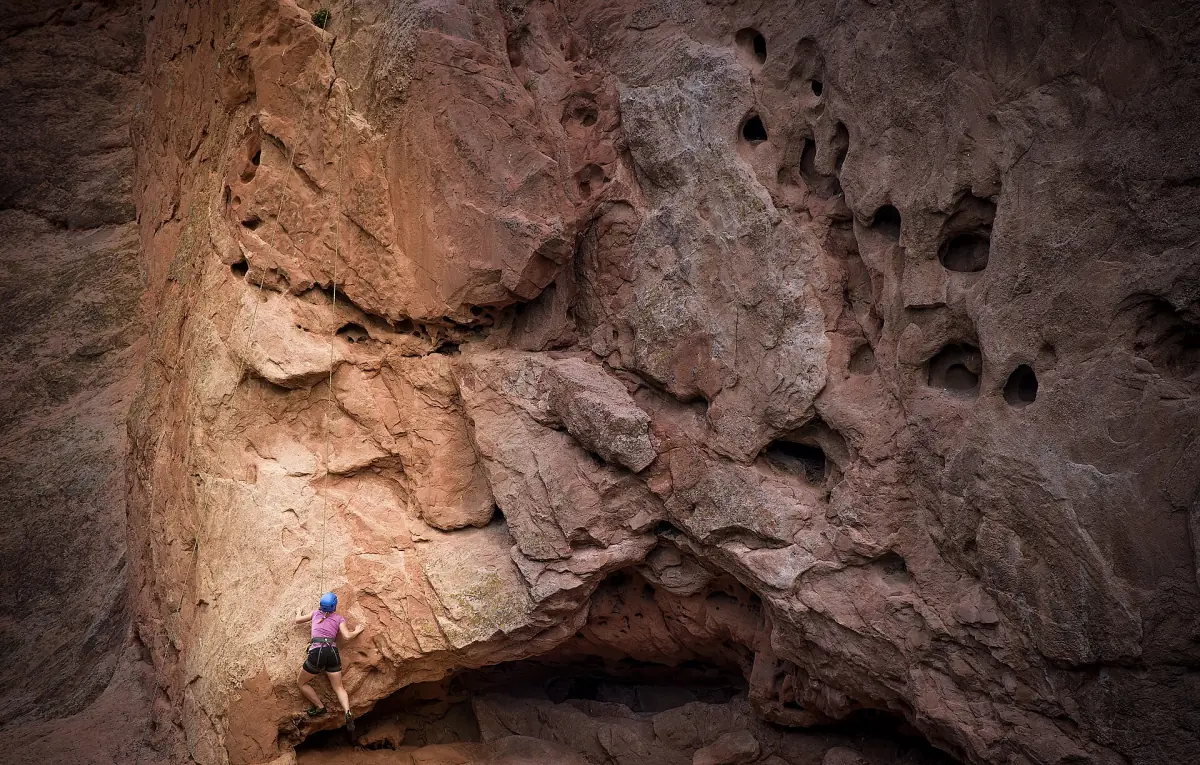
Rock climbing
Permits, seasonal closures and the rules for climbers.
Visitor and Nature Center
Hours, exhibits and the Geo-Trekker film on the red rocks.
Rock formations: frequently asked questions
What are the Kissing Camels at Garden of the Gods?
Kissing Camels is a named rock formation listed on the city's park map. It is a formation in the park, not a ticketed attraction. Guided tours may show it as a viewpoint, but no tour is guaranteed to stop there.
Can I climb the Kissing Camels or other formations?
Not freely. Technical climbing needs a free annual city permit and follows set rules. Unprotected scrambling above 10 feet (3.05 m) is banned. Do not climb a formation just because it has a name.
Why is the rock red?
Iron oxide in the sandstone gives it the red color. The rock comes from sand, gravel and mud from the Ancestral Rockies and from former sand dunes, and the layers were later tilted upward.
How old are the rocks?
City teaching material gives 320 to 300 million years for the Fountain Formation and 300 to 260 million years for the Lyons Formation. The tilting began about 70 million years ago.
Which formations can I reach on foot?
The Siamese Twins trail is 1 mile (1.6 km) out and back and rated easy. Others you see from roads and lots. Balanced Rock can be seen from its own parking area.
Is there an entry fee for the formations?
No. Garden of the Gods is a free city park. Optional extras such as tours and the film cost money. See the visitor center page.